The Ultimate Guide to Chair Dimensions: Ergonomic Measurements and Project Standards
Updated: 10 hours ago
While often overshadowed by beds or sofas in the furniture world, the chair is the foundational piece of furniture we use most frequently throughout the day. From the kitchen chair where you have your morning coffee to the office chair where you spend hours, its role in our daily lives is undeniable. Not just at home; seats in your personal vehicle, shuttles, or public transport are also functional derivatives of the chair. As a furniture piece with such a central role, its dimensions are of critical importance for comfort and health.
Incorrect height, back angle, or depth can lead to serious health issues over time. Therefore, as a contract furniture manufacturer, there are numerous technical details we meticulously consider. As consumers or project procurement managers, making selections tailored to human anatomy and intended architectural use is essential.
Why Are Chair Dimensions Vital for Health? Selecting a chair that adheres to ergonomic standards directly impacts not only immediate comfort but also long-term health. Even details like the clearance under the desk it will be paired with or the flooring type (e.g., carpet vs. hardwood) influence these choices.

International Standards in Ergonomic Chair Dimensions

International standards are designed in accordance with general human anatomy, aiming for optimum comfort. Here are the fundamental ergonomic data you need to consider for purchasing and architectural projects:
Backrest Angle: An average of 102° supports the natural curve of the spine, providing the ideal ergonomic angle.
Seat Height: The ideal height from the floor to the seating surface should be between 45 cm and 50 cm. This range ensures feet rest flat on the ground and knees are bent at a 90-degree angle.
Seat Depth: A depth between 40 cm and 45 cm is the generally accepted standard for comfort, allowing users to lean fully back without applying pressure to the back of the knees.
Armrest Height: If armrests are present, a height of 65 cm to 70 cm from the floor allows the shoulders to relax and ensures the chair can easily slide under standard tables.

Pacto Chair
Custom Chair Dimensions for Specialized Spaces
Bar Stools and Chairs: For high counters and tables, the seat height for these products is generally standardized around 75 cm.
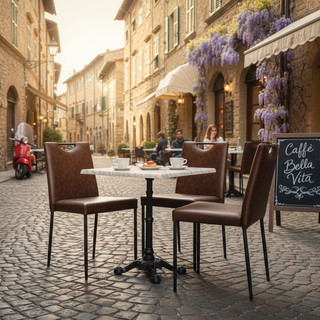
Restaurant and Cafe Furniture: In HORECA projects, rather than strict standard dimensions, custom sizing tailored to the venue's concept, specific table heights, and spatial density is often preferred.

Moderna Chair ve Stoles Barstool
Conclusion
Selecting the correct chair dimensions requires striking a balance between comfort, health, and spatial aesthetics. At Sefes Mobilya, alongside standard production, we provide custom sizing and design consulting tailored to your B2B projects. Contact us to determine the ideal dimensions your architectural project demands and discover our uncompromisingly high-quality manufacturing solutions.
Comments